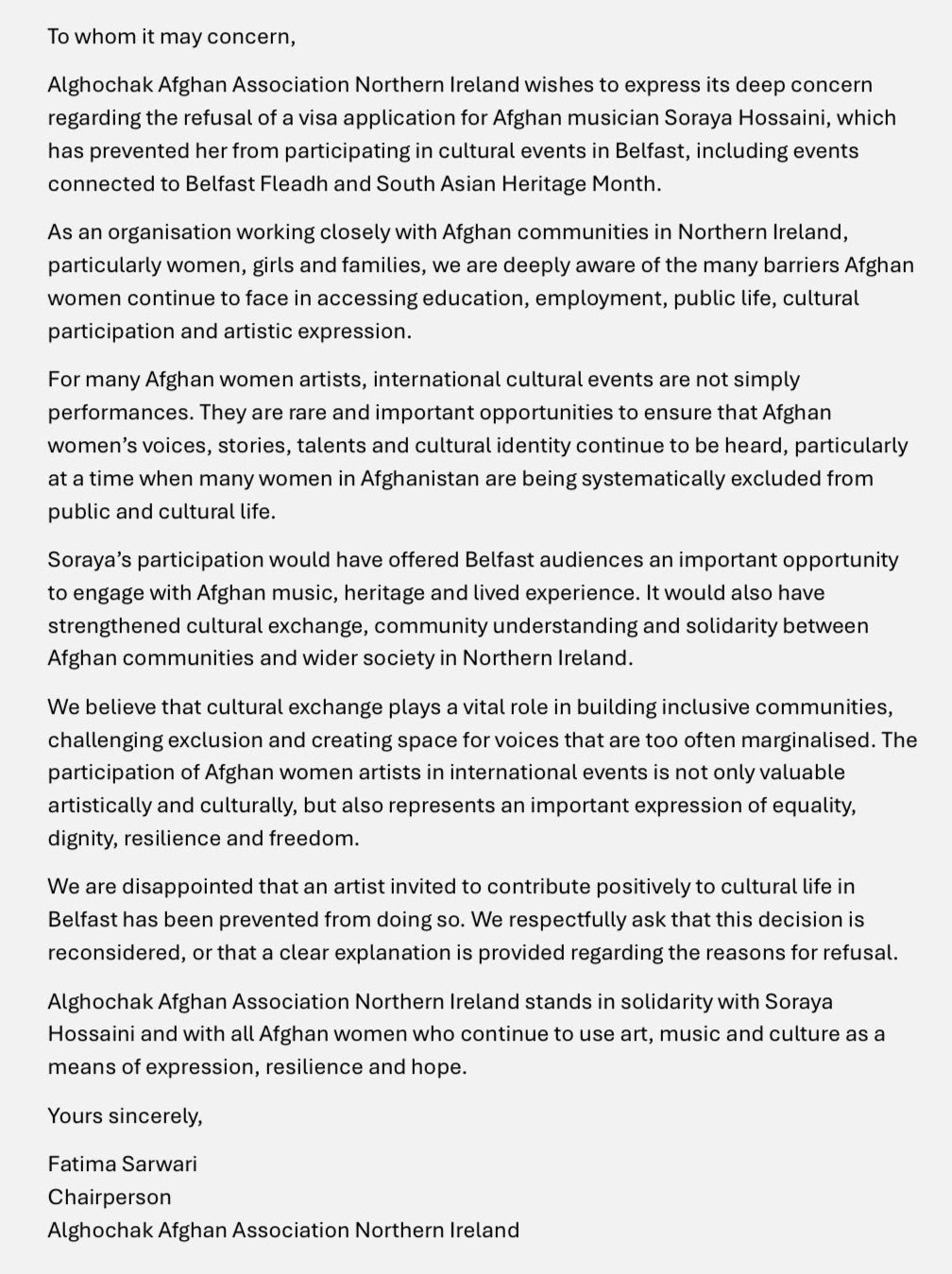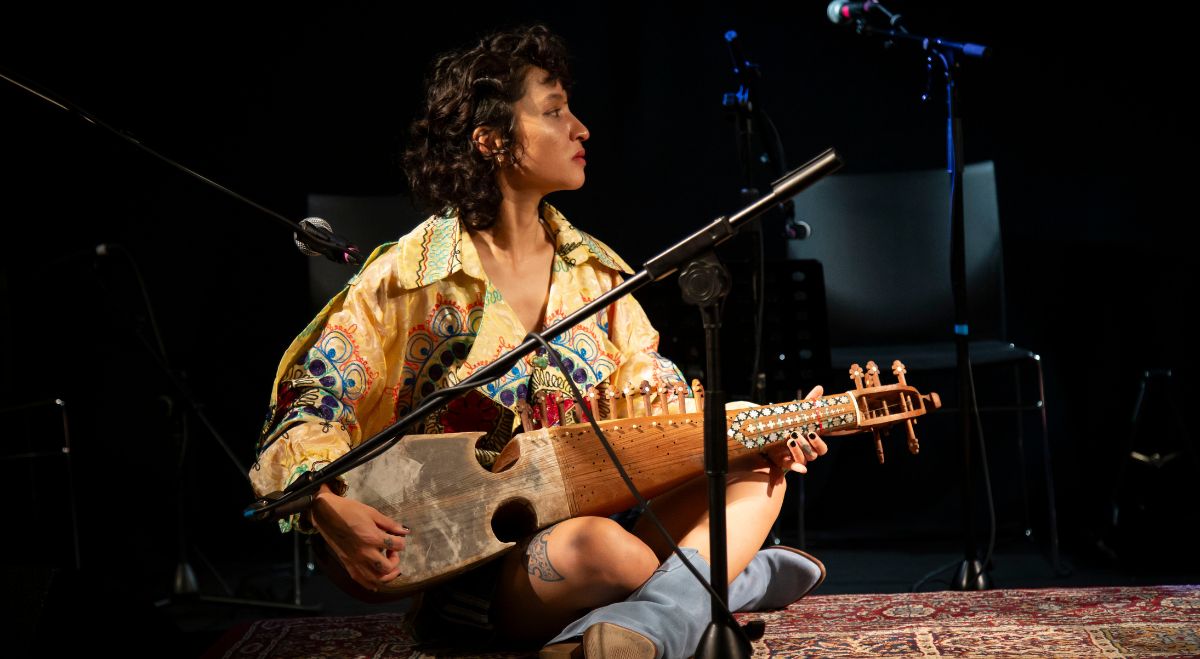
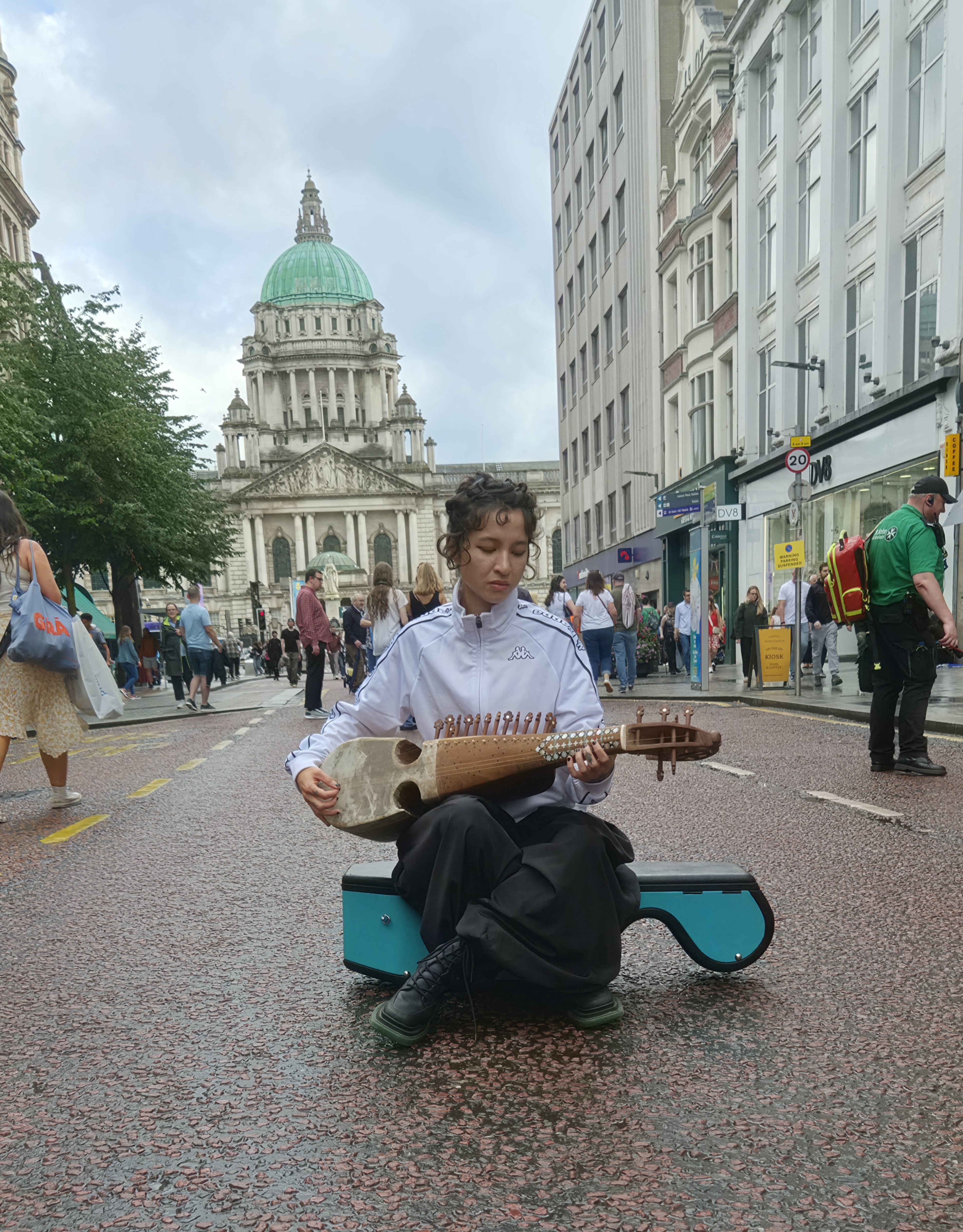
Afghan musician Soraya Hossaini was invited to perform at the largest festival celebrating Irish culture and beyond, Belfast has ever hosted, Fleadh Cheoil na hÉireann. Her visa that was first declined was quickly overturned due to a viral social media campaign, intervention cross party by politicians, organisations defending Afghan women freedom and influencers in the music industry. (Some example letters below)
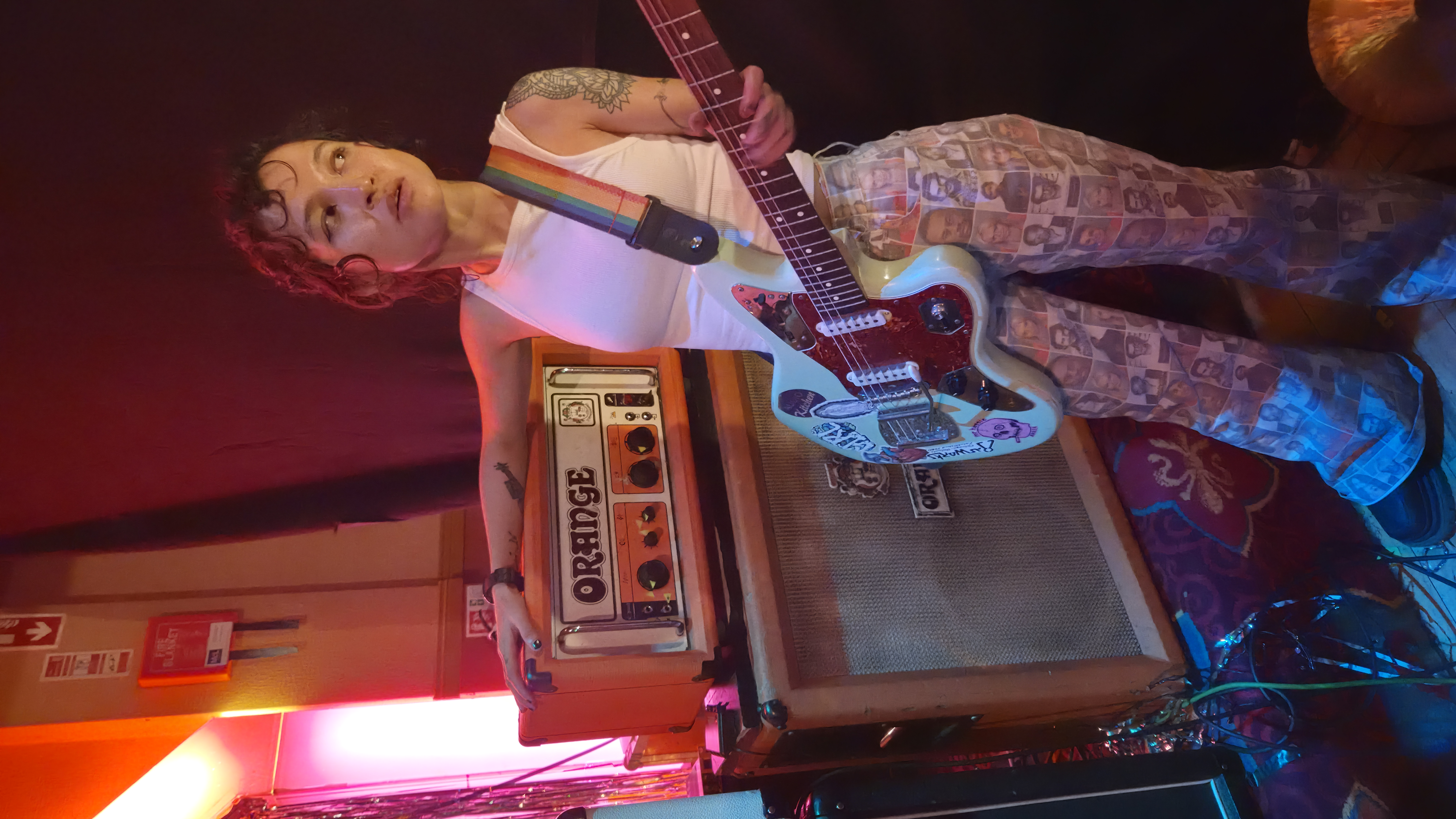
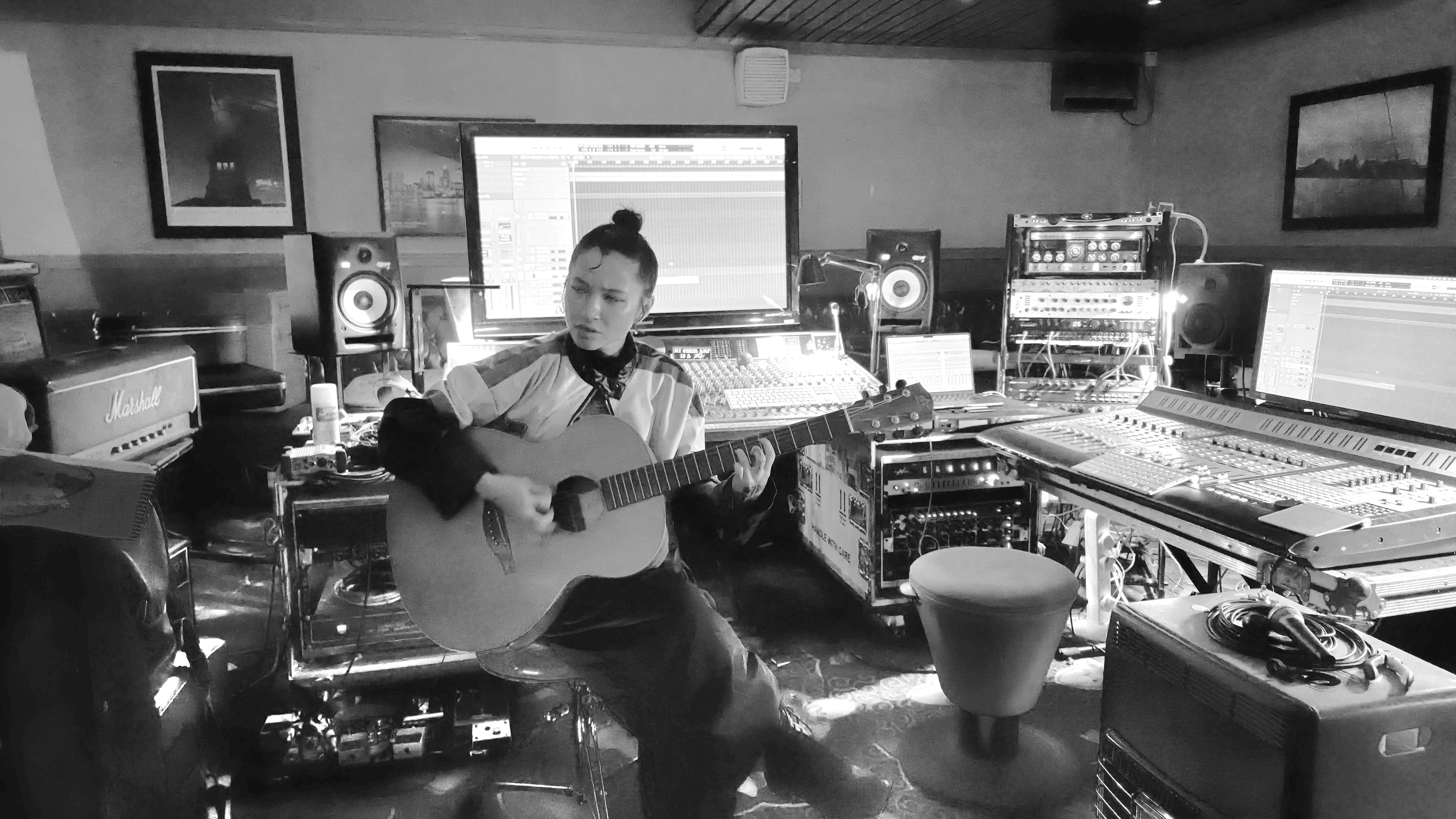
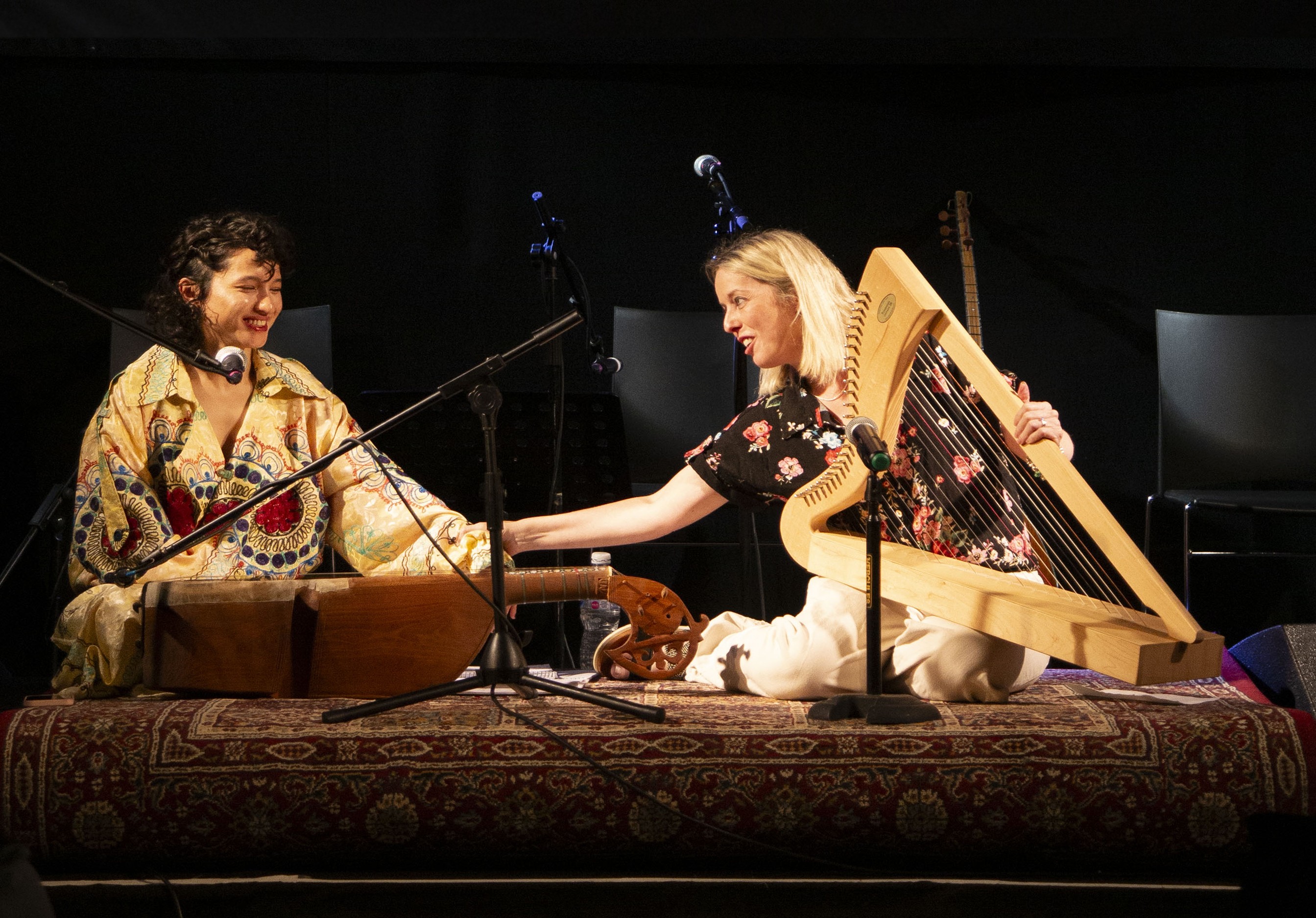
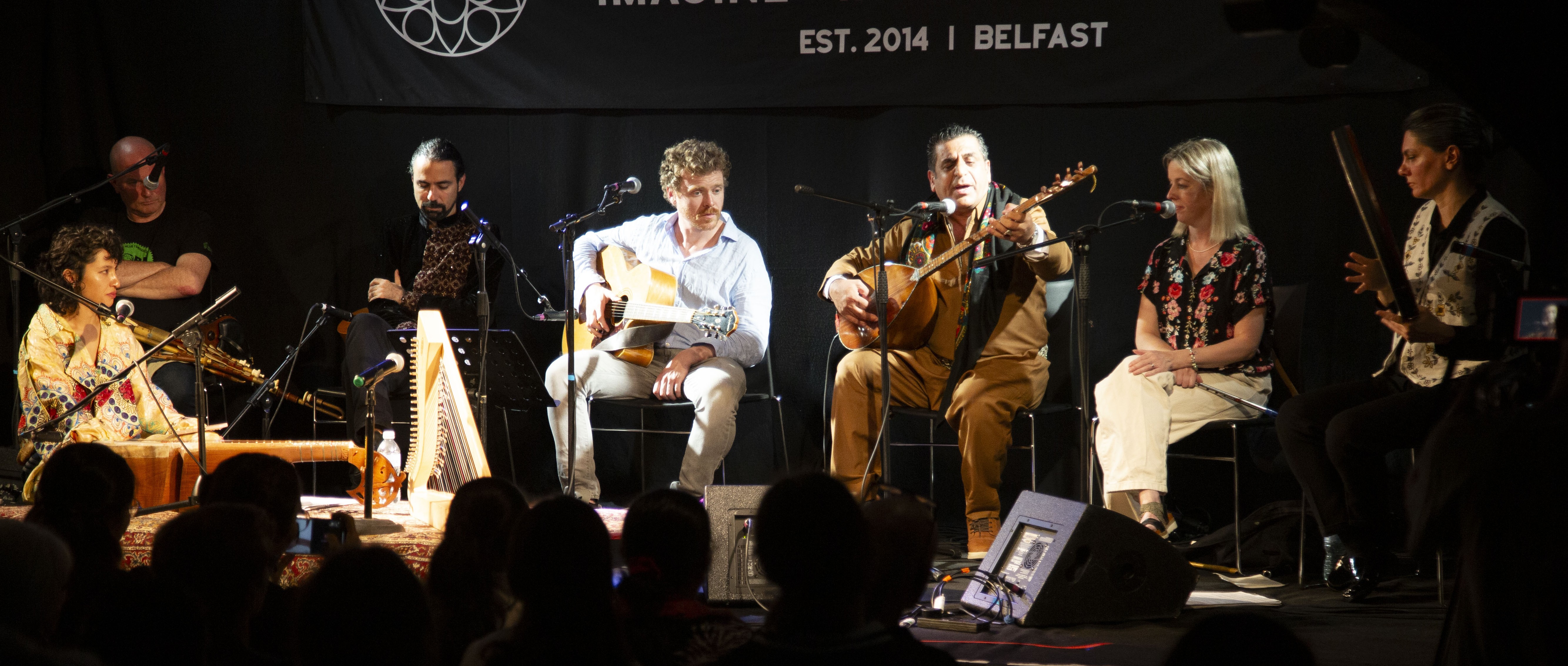
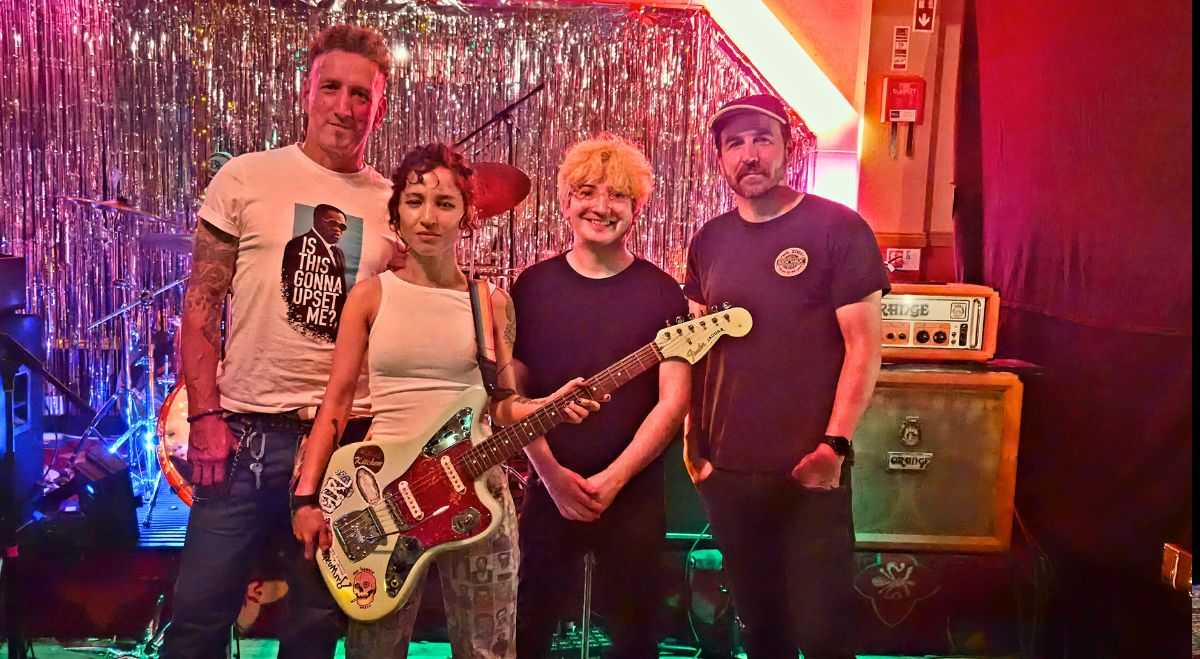
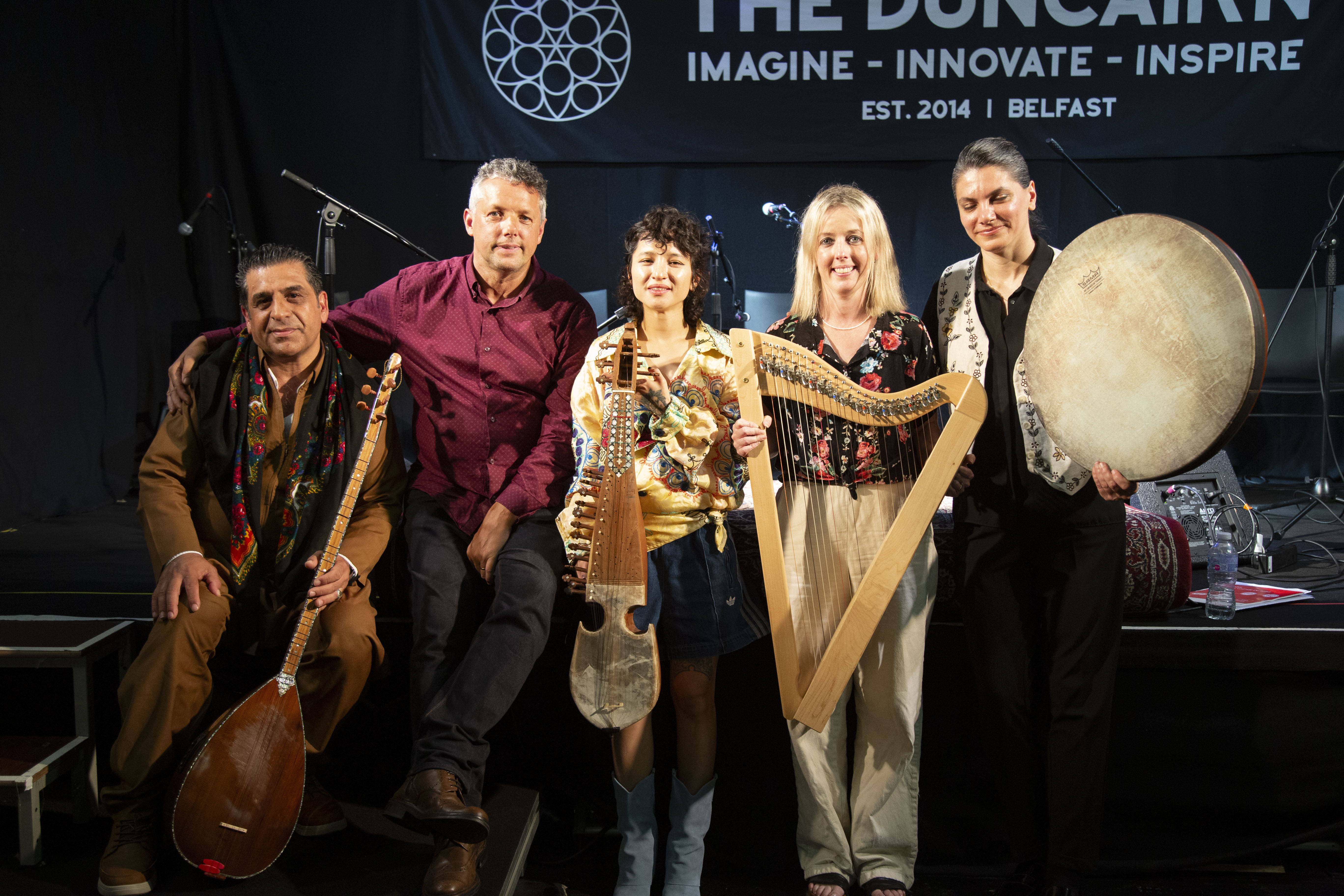
Soraya performed at the Persian, Kurdish Celtic Connection concert at The Duncairn Arts Theatre along side musicians from Ireland, Iran and Syria. Soraya also began a collaboration journey with punk/rock band Cut Rubber. Her visit to Belfast was supported by Beyond Skin partners Artists Freedom Initiative (AFI), Initiative pour la Liberté Artistique (ILA), Freemuse, Orange Amplifiers and Alghochak. Special thanks also to Retro Recording Studios and IBIS Belfast / Andras Hotels Groups and Duncairn Arts team.
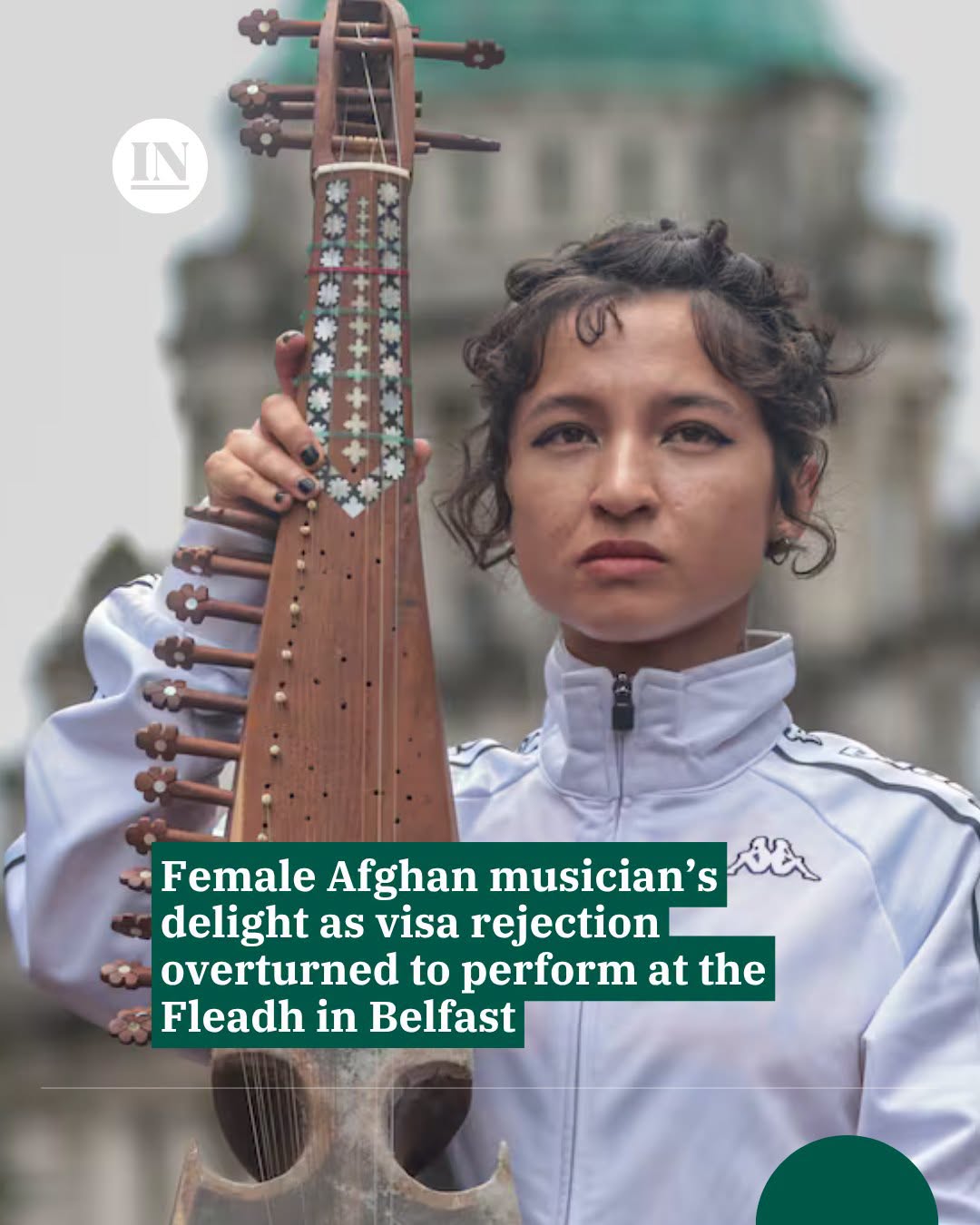
"My trip to Belfast was truly a dream come true. The warm and welcoming people made me feel at home, and I loved hearing music everywhere throughout the day and night. I was also very happy to meet and spend time with all the wonderful people who were part of this project. Even the weather in Belfast was beautiful and pleasant, just like its people.
But the most special part of the whole experience was the final performance. Performing alongside such talented and experienced musicians was an unforgettable experience, and I learned so much from being around them. It is a night that I will always remember.
For me, this experience also had a deeper meaning. Women in Afghanistan are living under very difficult restrictions, and I feel very grateful to be in a position where I can use my voice to represent them and share their stories. I am proud and happy to be their voice and to show that their dreams, talents, and voices still deserve to be heard." - Soraya
CONCERT FILMS AND DOCUMENTARIES
Filmed by Green Dungarees Productions, concert films of the Persian Kurdish Celtic Connection will be released this Autumn. Photo galleries of the concert by y Maziyar Mohammadioun are available to view on Facebook and Photobucket. Soraya performed solo songs and collaboration songs with the musicians Sara Fotros, Joanne Malone, Cormac Ó Briain, Omid Asghar, Conor Pelan, Swar Ahmed.
Documentaries are also in production.
Soraya' visit will become part of "My Lost Instrument", a new feature documentary directed by award-winning filmmaker Vidyut Latay, in partnership with Green Dungaree Productions and Beyond Skin. The film follows Afghan musicians living in exile, with a special focus on the experiences of women musicians. Through their journeys, the documentary explores the enduring bond between musicians and their instruments. The film will document Soraya and other Afghan musicians performing at other Belfast events and in the wider diaspora.
A documentary also following Soraya's journey with the band Cut Rubber.
PRESS COVERAGE LINKS
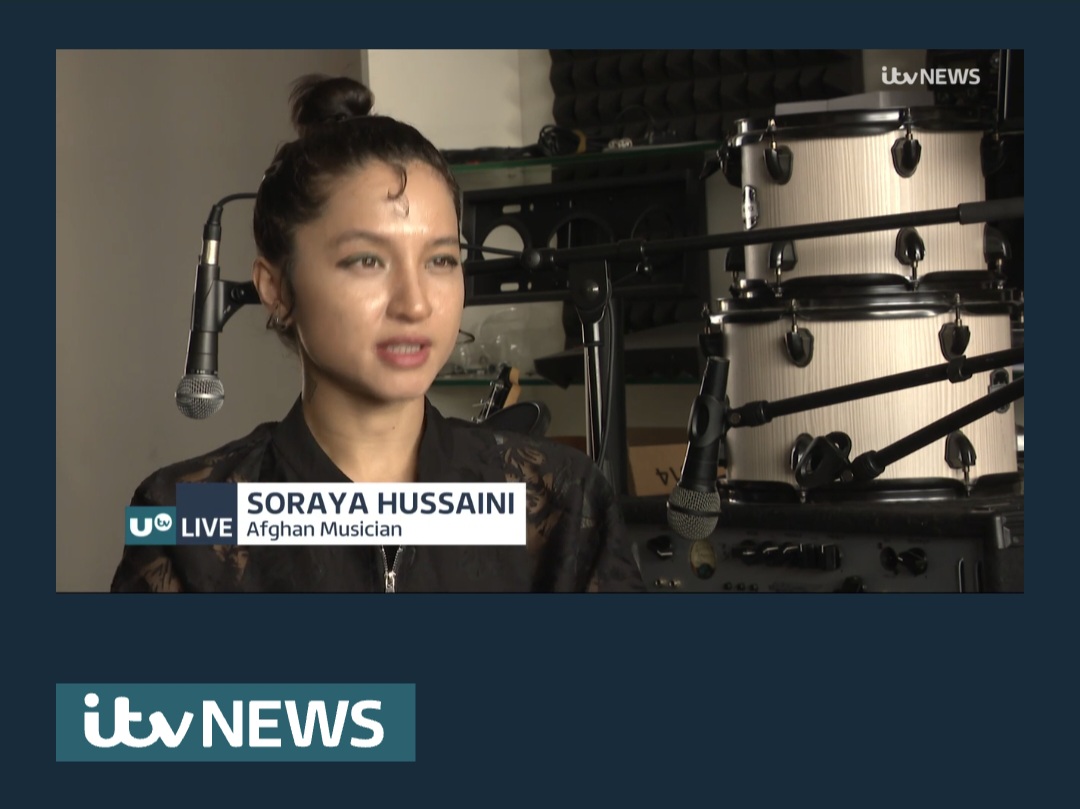
Belfast Telegraph Interview (text)
Belfast Telegraph Interview (video)
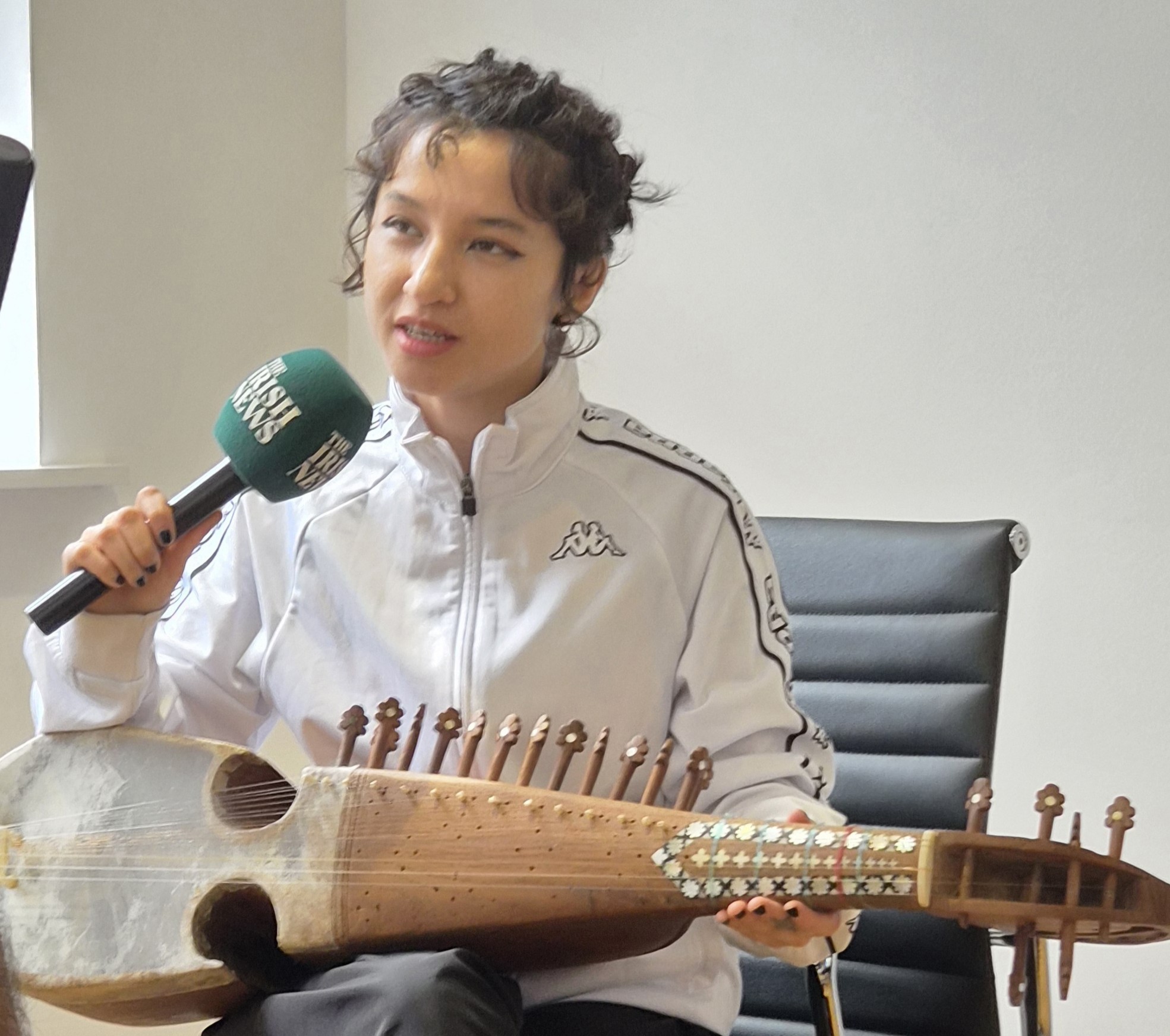
Irish News (text)
Irish News (video)
BBC Northern Ireland (text)
LETTERS
FREEMUSE (DEFENDING ARTISTIC FREEDOM
It is with great concern and frustration that I have been informed by our partner Beyond Skin about the British Government refusal to let Afghan woman musician, Soraya Hossaini,
perform at Belfast Fleadh. Travel bans present a major crisis for the global performing arts sector. A travel ban for artists is a violation of artistic freedom because it inherently restricts mobility, which is an essential condition for creative expression, distribution, and cultural exchange. Freemuse views the free movement of creators as a fundamental right that underpins free expression and dialogue. Restricting this mobility violates artistic freedom in several distinct ways:
- Stifle's Collaboration and Creation: Art relies on cross-cultural understanding, collaboration, and live performance. Restricting movement disrupts tours, exhibits, and face-to-face exchanges of ideas.
- Denies the Right to an Audience: Free speech includes the public's right to receive information and diverse cultural perspectives. Travel bans prevent citizens from engaging directly with an artist's work.
- Silences Dissident Voices: Artists are often the most powerful critics of authoritarian regimes and oppressive systems. Travel bans cut off critical platforms for persecuted artists and prevent them from seeking safe haven abroad.
- Drives Self-Censorship: The threat of travel bans, border interrogation, and unpredictable visa restrictions creates a chilling effect. It forces artists and arts institutions to self-censor and avoid controversial or political themes out of fear of repercussions.
Freemuse had documented travel bans as one of the most prominent, growing tools of censorship used to punish creators and silence independent cultural expression. When artists are subjected to travel bans, these restrictions primarily conflict with international frameworks protecting human rights and cultural diversity.
The 2005 Convention on the Protection and Promotion of the Diversity of Cultural Expressions: This treaty explicitly outlines the right of artists to travel and share their work internationally. It establishes that cultural diversity can only thrive if artistic freedom— including the mobility of artists—is respected and protected. The 1980 Recommendation concerning the Status of the Artist: This foundational
UNESCO text requires member states to recognize the essential role of artists in society and calls on governments to take measures to ensure artists can freely practice their profession and travel across borders.
Conclusion: Freemuse believes that the British Government's refusal to let Soraya Hossaini perform at the Belfast Fleadh is a clear breach of the UK's obligations under the UK's ratification of the 2005 Convention on the Protection and Promotion of the Diversity of Cultural Expressions in December 2007. Against this background, Freemuse is requesting the British Government to immediately approve Soraya Hossaini's application for entry to the UK so that she can perform at the Belfast Fleadh and participate in the activities Beyond Skin has planned for her. Freemuse is an independent international non governmental organization advocating for freedom of artistic expression and cultural diversity. Freemuse has United Nations Special Consultative Status to the Economic and Social Council (UN-ECOSOC) and Consultative Status with UNESCO.
Sincerely yours,
Sverre Pedersen
Executive Director
Freemuse
INITIATIVE FOR ARTISTIC FREEDOM
I am writing with profound concern regarding the decision to refuse entry to Afghan musician Soraya Hosseini, preventing her from traveling to the United Kingdom to participate in the Belfast Fleadh and the cultural activities organized by Beyond Skin. As the Executive Director of the Initiative pour la Liberté Artistique (ILA), I work closely with artists from around the world whose ability to create, perform, and share their work is restricted by conflict, persecution, displacement, or political barriers. I have seen firsthand how access to international cultural platforms can be transformative, not only for artists themselves, but also for the communities that welcome them. For an artist such as Ms. Hosseini, the opportunity to perform abroad is far more than a professional engagement. It is an opportunity to share her culture, connect with new audiences, build professional networks, and contribute to meaningful dialogue through music. Denying that opportunity represents a significant loss, not only for the artist but also for the audiences and communities who would benefit from her participation.
Artistic freedom depends on the ability of artists to engage with the world beyond their borders. Music, like all forms of artistic expression, creates understanding between people from different backgrounds and experiences. When artists are unable to travel and participate in cultural events, opportunities for learning, dialogue, and mutual respect are diminished. This concern is particularly acute in the case of Afghan women artists, many of whom face extraordinary challenges in pursuing their artistic careers. International invitations and performances often provide rare opportunities for visibility, professional development, and artistic exchange. These opportunities should be encouraged wherever possible. The United Kingdom has a long and respected tradition of supporting cultural diversity and international artistic collaboration. Events such as the Belfast Fleadh embody these values by bringing together artists and audiences from different cultures and traditions. The participation of artists like Soraya Hosseini enriches these exchanges and strengthens the role of culture as a bridge between communities. For these reasons, I respectfully urge the relevant authorities to reconsider Ms. Hosseini's case and facilitate her travel to the United Kingdom so that she may participate in the Belfast Fleadh and the activities planned by Beyond Skin.
At a time when artistic voices around the world face increasing challenges, it is essential that opportunities for cultural participation and artistic exchange remain open and accessible. Supporting artists' mobility is not simply an administrative matter; it is an affirmation of the importance of culture, dialogue, and freedom of expression.
Thank you for your consideration of this matter.
Yours sincerely,
Executive Director
Initiative for Artistic Freedom (ILA)
Geneva, Switzerland
ORANGE AMPLIFIERS
I am writing on behalf of Orange Amplification to respectfully ask that the decision to refuse entry to Afghan musician Soraya Hossaini be reviewed and reconsidered
Ms Hossaini is an Afghan musician currently residing in Germany. She has been invited to travel to the United Kingdom to participate in the Belfast Fleadh and the cultural activities organised by Beyond Skin. This visit would allow her to perform, collaborate with other musicians, share Afghan music with UK audiences, and take part in meaningful cultural exchange.
Orange Amplification is a British music company with a long history of supporting musicians in the United Kingdom and internationally. Since 1968, Orange has been part of British music culture and has worked with artists across many genres, generations, and countries. The company has also been recognised with multiple Queen’s Awards for Enterprise / International Trade, reflecting its contribution as a British company with a global reputation in music. Over the decades, Orange has been associated with many internationally respected artists and musicians, including Stevie Wonder, Fleetwood Mac, Jimmy Page and Ed Sheeran. Orange has also been trusted by and connected with many female artists and performers, including Ruby J, Nikki Pickle, Meg Castellanos, Crack Shot and Frayle. We mention this because Orange has always understood music as a space where talent, creativity and expression should be encouraged, regardless of gender, nationality, background or circumstance.
For Ms Hossaini, the opportunity to come to the United Kingdom is not simply a performance engagement. As an Afghan female musician, her participation carries a much wider significance. Afghan women and girls have faced severe restrictions on education, public life, creativity, and artistic expression. For an Afghan woman artist to be invited to take part in a respected UK cultural programme is therefore rare, important, and deeply symbolic. We fully understand that immigration decisions must be made carefully and in accordance with the relevant rules. However, we respectfully ask that Ms Hossaini’s case be considered in its full cultural, humanitarian, and equality context. In particular, we believe it is important to ensure that Afghan women and girls are not unintentionally disadvantaged or excluded from international opportunities.
Ms Hossaini’s participation in the Belfast Fleadh and the programme organised by Beyond Skin would contribute positively to the United Kingdom’s long-standing support for cultural diversity, artistic freedom, and international collaboration. Her presence would enrich the event, provide UK audiences with an opportunity to hear Afghan music from a female artist’s perspective, and send an important message that Afghan women’s voices continue to matter. We therefore respectfully urge the relevant authorities to review the decision and reconsider Ms Hosseini’s application, taking into account her residence in Germany, the nature of the invitation, the cultural value of the visit, and the importance of ensuring that Afghan women are not left behind in opportunities for international representation. Allowing Ms Hosseini to attend would support not only one individual artist, but also the broader principle that music builds bridges between communities. It would affirm that cultural exchange should remain open to women as well as men, and that artists who face exceptional barriers should be given every fair opportunity to participate. Thank you for taking the time to consider this matter.
Yours sincerely, Sarah Yule Managing Director Orange Amplification.
(ALGHOCHAK) AFGHAN ASSOCIATION NORTHERN IRELAND